Custom software for when "good enough" isn't good enough.

Many teams live with daily friction because they assume software has to be off-the-shelf. It doesn't. Custom software can be designed around how your business already works, removing bottlenecks without blowing everything up.

  • Key steps in your operation live in someone's personal spreadsheet or inbox.
  • Staff are copying and pasting data between accounting, CRM, inventory, and ordering tools.
  • Reporting takes hours of manual work each week just to see what's going on.

We focus on businesses that have outgrown generic platforms and one-off spreadsheets, but don't necessarily have an internal software team. If parts of your operation live in email threads, manual reports, or someone's personal workbook, custom software is often the missing piece.

This page walks through why custom software matters, what it actually is, how it fits alongside your existing tools, and the kinds of problems it can solve in practice.

Why custom software

When daily friction doesn't have to be normal

Many businesses quietly accept slow, error-prone workflows as just "how it is".

  • Spreadsheets that only one person truly understands.
  • Double entry between systems and manual copy/paste of data.
  • Critical processes tracked in email threads or ad-hoc documents.
  • Reporting that requires rebuilding the same exports and pivot tables every week or month.

Custom software becomes relevant when this friction starts to cost real money and time — missed opportunities, frustrated staff, limits on how many orders, locations, or clients you can comfortably handle.

What custom software is

Custom software is usually web-based, so your team can access it securely from anywhere, on any device, at the same time. It doesn't live on one person's computer or rely on a single spreadsheet.

Instead of forcing you to adopt a whole new way of working overnight, it's designed around your existing workflows and language. We keep what already works, and replace or automate the parts that don't.

Where it fits with your existing tools

Off-the-shelf tools are great for getting started, but they're built for the average case. As your business becomes more unique, you're forced into awkward workarounds, add-on tools, and ever-more spreadsheets.

Custom software makes sense when you want your systems to reflect how your business actually operates, with the flexibility to evolve over time — without throwing away everything you already use today.

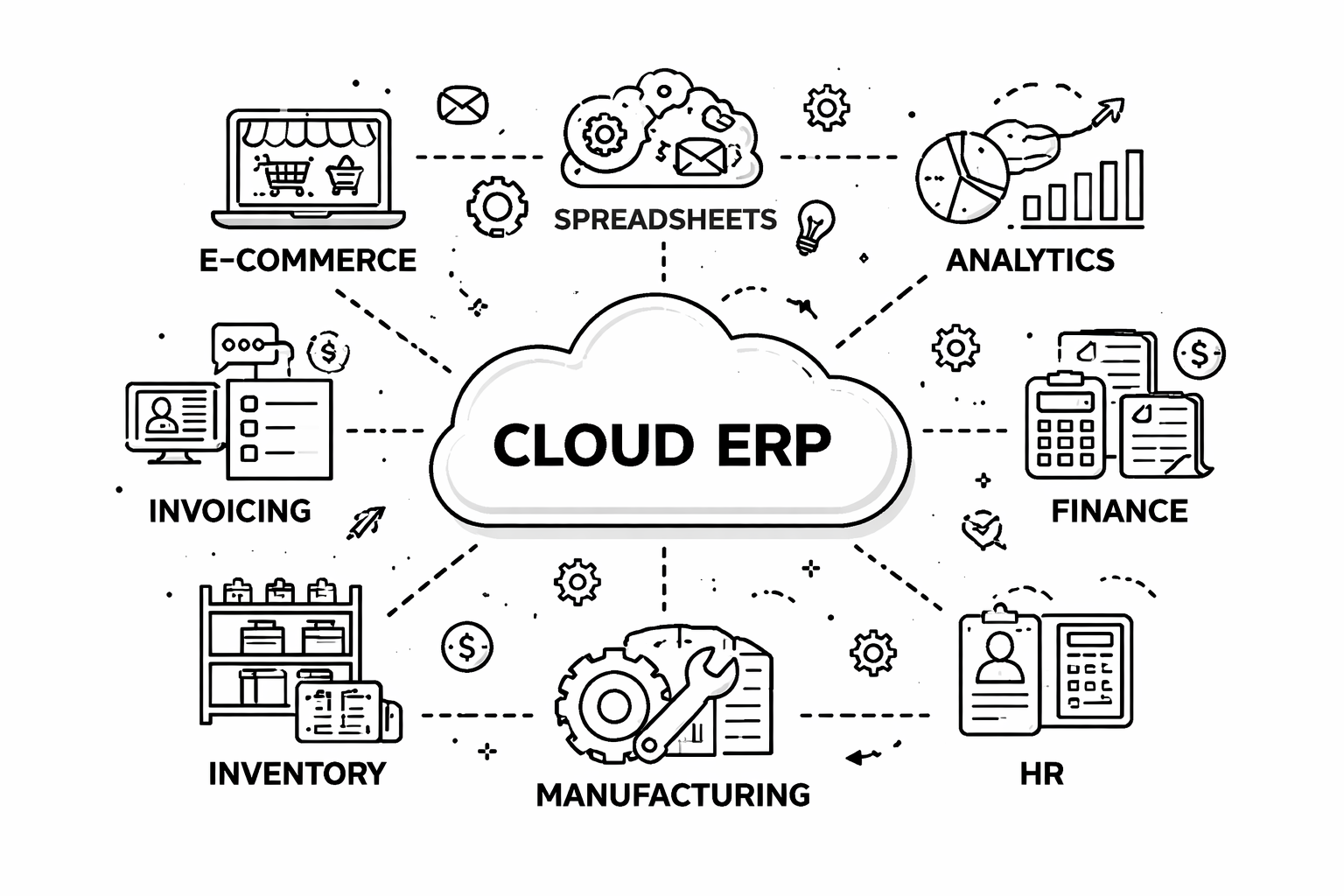
Connected systems and data in the cloud
What it can do

What custom software can do for your business

Custom software doesn't have to replace everything you use. It can sit at the center of your workflows, automating the busywork, connecting the tools you rely on, and enforcing the process you actually want followed.

Automate spreadsheets & manual work

Turn complex spreadsheets and email-based workflows into a shared, structured system. Calculations, lookups, and repetitive updates happen automatically instead of being rebuilt by hand.

Integrate separate systems & data

Connect accounting, ordering, inventory, logistics, and other third-party systems so data moves automatically between them instead of being copied and pasted.

Enforce reliable workflows

Implement clear, repeatable processes with roles, approvals, checks, and tracking so important steps don't get skipped and responsibilities are visible.

Handle payments & billing

Integrate payment processing, invoicing, and billing into your core workflows so getting paid is part of the system, not an extra manual step.

Power customer-facing experiences

Power your website, customer portal, or ordering platform and tie it directly into your back-end systems so online activity and internal operations stay in sync.

Stay scalable, secure, and reliable

Design for growth from day one — more orders, users, and locations — with a web-based system that's secured, backed up, and treated as mission-critical infrastructure.

How we deliver custom software
Process

How we deliver custom software

We start from how your business already works today, then design and build software to reduce friction step by step — instead of asking your team to throw everything out and start over.

1. Understand the business

We start with your workflows, constraints, and goals — what's slow, error-prone, or blocking growth for your team.

  • Deep dive into current tools, spreadsheets, and processes.
  • Identify risks, edge cases, and automation opportunities.
  • Align on scope, priorities, and success metrics.

2. Design the right system

We map out data flows, integrations, and the core workflows your custom software needs to support.

  • System and data architecture tailored to your environment.
  • Clear integration points with existing tools and data sources.
  • Roadmap broken into small, shippable milestones.

3. Build fast, iterate fast

We deliver usable slices quickly so your team can start getting value and we can refine based on real usage.

  • Rapid implementation with frequent, practical check-ins.
  • Refinements guided by real-world usage and feedback.
  • Ongoing support so the system keeps pace with your business.

Ready to talk about your custom system?

Whether you're outgrowing spreadsheets, wrestling with generic tools, or just starting to imagine what's possible, we can help you map out a practical path to custom software.